A Guide by JacRox
Getting Started: How to Use Xero
Xero is cloud-based accounting software built for small business owners who want to manage their own finances. You use Xero through your browser – no downloads, no desktop app, no IT department. Sign up, connect your bank account, and start tracking your money the same day.
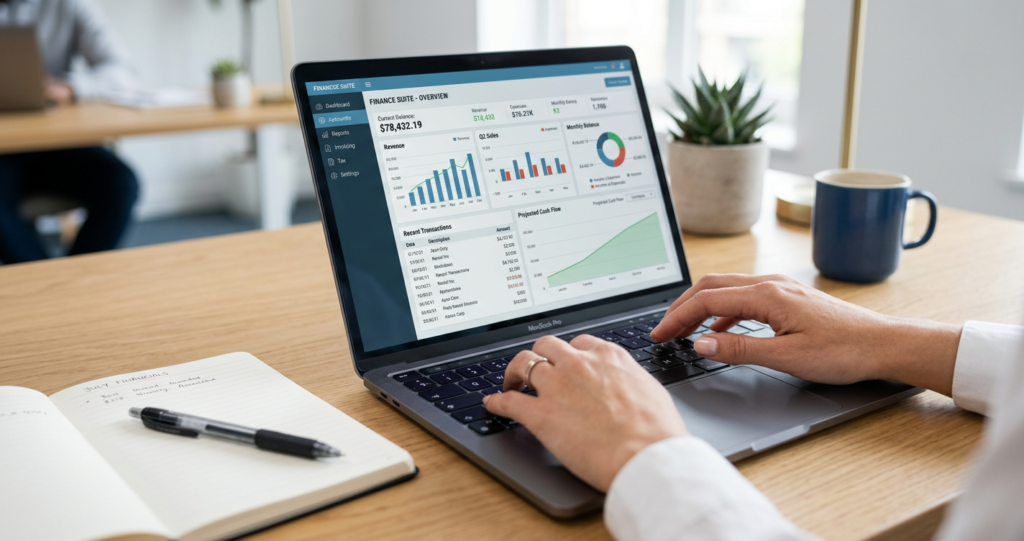
If you’ve just switched from spreadsheets or other accounting software like Sage, Xero will feel different. The dashboard shows your bank balances, outstanding invoices, and bills due at a glance. Everything updates in real time as bank transactions come through your feed. For UK small businesses, Xero handles VAT, Making Tax Digital, and even payroll.
Connect Your Bank Account First
The first task after creating your Xero account is connecting your bank. Go to Accounting > Bank accounts and click “Add bank account”. Search for your bank – Barclays, HSBC, Lloyds, NatWest, Starling, Monzo and most other UK banks connect automatically.
Once connected, Xero pulls in your bank transactions daily. You don’t need to download CSV files or type anything manually. The bank feed is what makes Xero genuinely useful as accounting software – it turns bookkeeping from a weekend task into a 10-minute daily habit.
Bank Reconciliation in Xero
Reconciling means matching each bank transaction to an accounting entry. When you use Xero’s bank reconciliation screen, you either:
- Match a transaction to an existing invoice or bill from a client or supplier
- Create a new entry and categorise the transaction to the right account
- Transfer money between bank accounts
Xero’s AI learns from your patterns. If you buy supplies from the same contact every week, the software suggests the same category after the first couple of times. This task gets faster the more you use Xero for your small business accounting.
Aim to reconcile your bank transactions daily or at least weekly. Don’t let them pile up – that’s how errors creep in and your accountant or bookkeeper has to spend extra time fixing things.
Creating and Sending Invoices
Go to Business > Invoices and click “New invoice”. Add your client’s contact details, line items, and due date. Xero calculates VAT automatically based on your tax settings. You can send the invoice directly from the software by email, or download it as a PDF.
Features most beginners miss when they first use Xero:
- Recurring invoices – set up a template for monthly retainer clients and Xero sends them automatically. One less task each month.
- Online payments – connect Stripe or GoCardless so clients can pay directly from the invoice link
- Invoice reminders – Xero can chase overdue invoices automatically. Set it up once and the software handles follow-ups.
Tracking Expenses in Xero
Every business expense needs recording. In Xero, enter bills manually (Business > Bills to pay) or use the Xero app on your phone to snap receipt photos. The app uses AI-powered OCR to read receipt details and creates a draft expense entry automatically – a useful feature for small business owners who are always on the move.
For UK businesses, getting expenses right matters for VAT returns. When you use Xero accounting software for VAT, the system needs the correct VAT rate on each expense to calculate your return accurately. Check the defaults for things like fuel and business entertaining, which have different VAT treatments.
Running Financial Reports
Xero has dozens of built-in reports. The ones you’ll use most as a small business owner:
- Profit and Loss – how much your business made (or lost) over a period
- Balance Sheet – what the business owns vs what it owes
- Aged Receivables – which clients owe you money and how overdue they are
- VAT Return – your MTD-compliant VAT figures ready to file with HMRC
- Bank Reconciliation Summary – confirms your bank transactions all match up
You can customise date ranges, compare periods, and export to PDF or Excel. Your accountant or bookkeeper will use these finance reports at year-end, so keeping your books clean through the year saves time and money later.
Is Xero Easy for Beginners?
Yes. Compared to desktop accounting software like Sage 50, Xero is straightforward to use. The interface is clean, most tasks are self-explanatory, and Xero Central has step-by-step guides for every feature.
The learning curve is mostly about understanding basic bookkeeping concepts, not the software itself. If you know the difference between an invoice and a bill, and you understand that money in needs to equal money out, you’ll pick up how to use Xero quickly.
If you get stuck, Xero training from a certified partner can get you confident in a single session. We cover all the day-to-day tasks: reconciliation, invoicing, expenses, and reports.
Do You Need an Accountant to Use Xero?
You don’t need one for everyday use. But for UK limited companies, you still need an accountant for statutory accounts and Corporation Tax returns. And if you’re VAT-registered, having your accountant or bookkeeper review your return before submission catches errors that HMRC penalties would make expensive.
The smart approach for any small business: do your own bookkeeping in Xero (bank reconciliation, invoicing, expenses) and let your accountant handle compliance. You manage the daily finance tasks, they handle year-end. Contact JacRox to find out how we help small business owners use Xero accounting software effectively.